You don't need to be fluent to have a good time in the Dominican Republic. But let me be honest with you: If you land here and only speak English (or stiff, textbook Spanish), you are wearing a giant sign that says "Please overcharge me."
Dominicans appreciate effort. We are loud, friendly, and we talk fast—like, really fast. We tend to "eat" the letter S and cut words in half. But if you try to drop a few local phrases, the dynamic changes instantly. The price on that painting suddenly drops, the bartender pours a little extra rum, and the smiles get genuine.
Here are the "Power Phrases"you need to navigate my country without looking like a lost gringo.
1. The Magic Shield: How to Handle Vendors
Walking on the beach in Bavaro means vendors will offer you cigars, braids, massages, and parrots for photos.
The Wrong Way:Ignoring them, getting angry, or pretending you don't hear them. That’s considered rude.
The Right Way:Smile, make eye contact, and say "No, gracias"firmly.
The "Pro" Level Move: "Ahorita" If a vendor keeps insisting ("Come look, my friend! Just looking!"), drop this nuclear weapon:
Phrase:"Ahorita, amigo."
Meaning:"Not right now" (Literally: "Little now").
The Secret:In Dominican culture, "Ahorita" is a polite limbo. It can mean "in 10 minutes," but usually, it means "Never, but I like you so I’m letting you down gently."It works 100% of the time.
2. At the Restaurant: Dining with Confidence
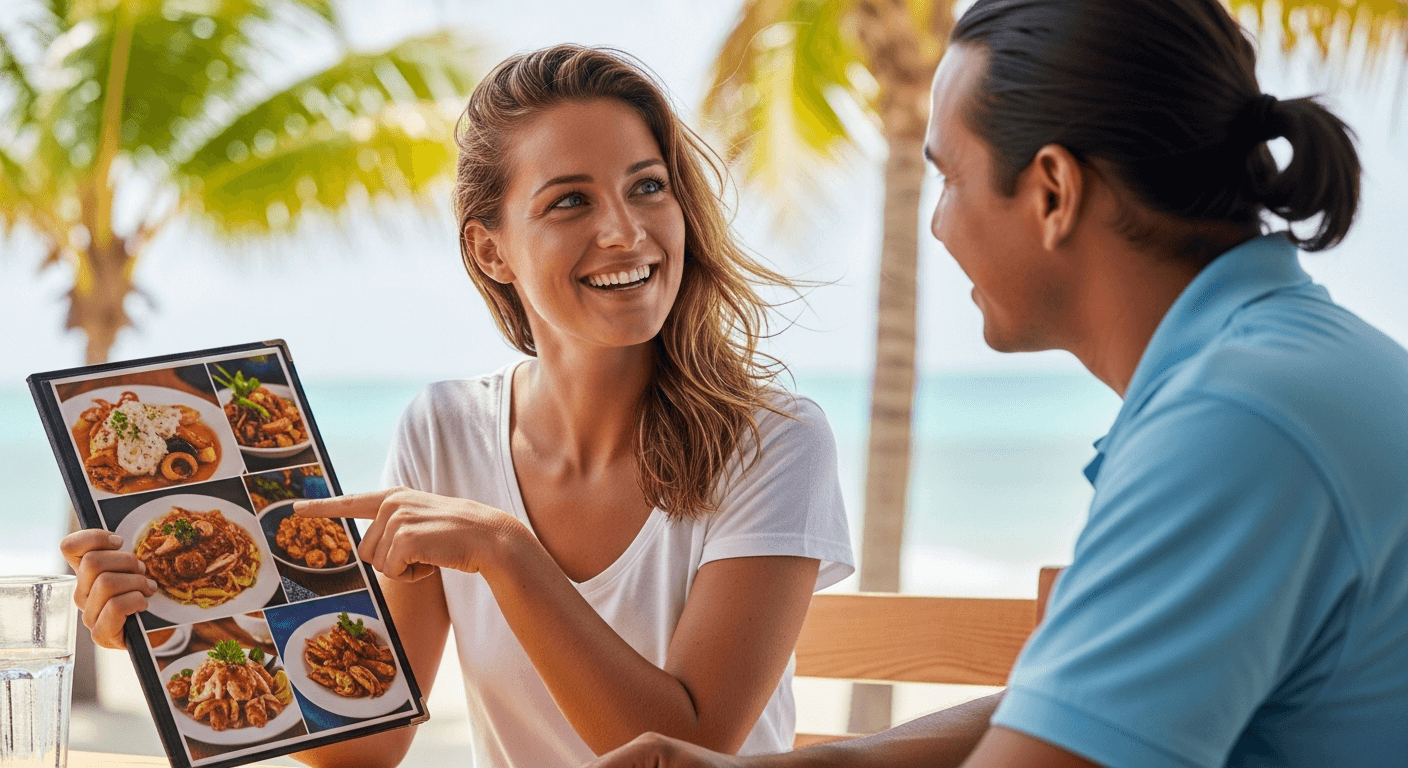
Don't just point at pictures on the menu. Use these:
"Una mesa para dos, por favor."
(Oo-nah meh-sah pah-rah dos)
Meaning:A table for two.
"¿Cuánto cuesta?"
(Kwan-toh kwe-stah)
Meaning:How much does it cost?
Tip:Always ask this beforeyou buy a coconut on the beach or get in a taxi.
"La cuenta, por favor."
(Lah kwen-tah)
Meaning:The check, please.
Body Language Hack:You don't even need to speak. Catch the waiter's eye and make a "scribbling" motion with your hand (like you are signing a signature in the air). They will understand immediately.
"Sin hielo, por favor."
(Seen yello)
Meaning:Without ice.
Why:Most ice in resorts is purified and safe. But if you have a sensitive stomach or are at a roadside shack, skipping the ice is a smart safety play.
3. The "Respect" Code (Important!)
Dominicans are surprisingly formal with greetings. Entering an elevator or a room without saying hello is seen as bad manners.
"Buen Provecho"(The Golden Phrase)
Pronounced:Bwen Pro-veh-cho
Meaning:Enjoy your meal (Bon Appétit).
When to use it:This is huge here. If you walk into a restaurant and pass a table where people are eating, or if you leave the elevator while others are chatting, say this. It is a massive sign of respect and class.
"Saludos"
Meaning:Greetings. It covers "Hello," "Good Morning," and "Good Afternoon" all in one.
4. Help! I'm Confused
Since we speak at Mach 10 speed, you will get lost. Use these:
"Más despacio, por favor."
Meaning:Slower, please.
"Yo no entiendo."
Meaning:I don't understand.
"¿Dónde está el baño?"
Meaning:Where is the bathroom? (Crucial after three Presidentes).
5. The Money Talk (Haggling)
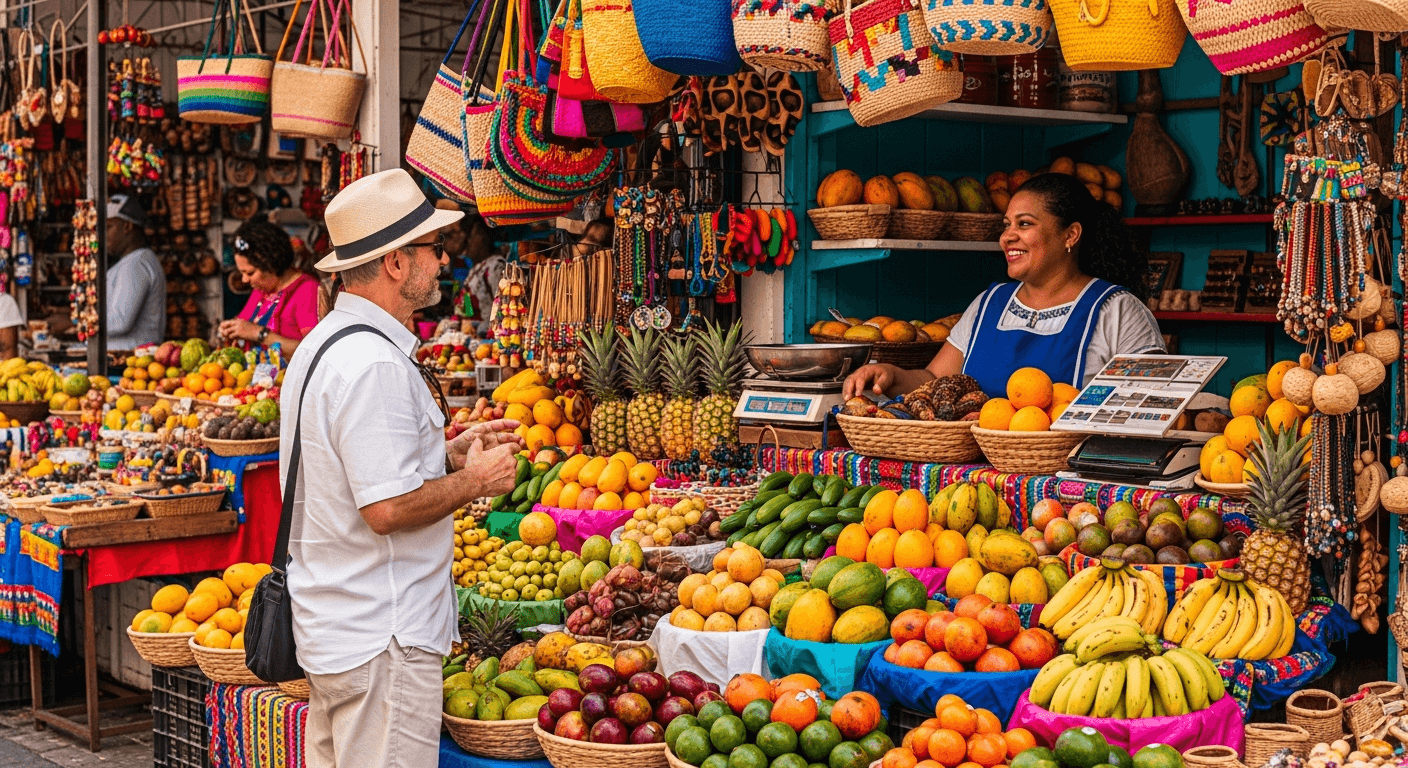
If you are shopping for souvenirs, never accept the first price.
"Eso es muy caro."
Meaning:That is too expensive. (Say it with a smile, not anger).
The Numbers you need:
Cien:(100)
Quinientos:(500) — Note:The 500 Peso bill is the standard currency for tips, small taxi rides, or a couple of beers.
Mil:(1,000)
Bonus: The "Cool" Factor
If you want to sound like you’ve been living here for months, use this when you see something you like:
"¡Qué chulo!"
Pronounced:Keh Choo-loh
Meaning:How cool! / That’s awesome!
Usage:Did the waiter bring you a drink with a sparkler in it? "¡Wow, qué chulo!"Did you see a nice view? "¡Qué chulo!"
Final Advice: Don't worry about your accent. We know Spanish is hard. The fact that you are trying to say "Una fría"instead of "One Beer"makes us respect you. Dale! (Go for it!)
.png&w=3840&q=75)
Written & Verified by
The Yatusabe Travel Team
We are a team of local explorers based in the Dominican Republic.
Some images are AI generated representations.