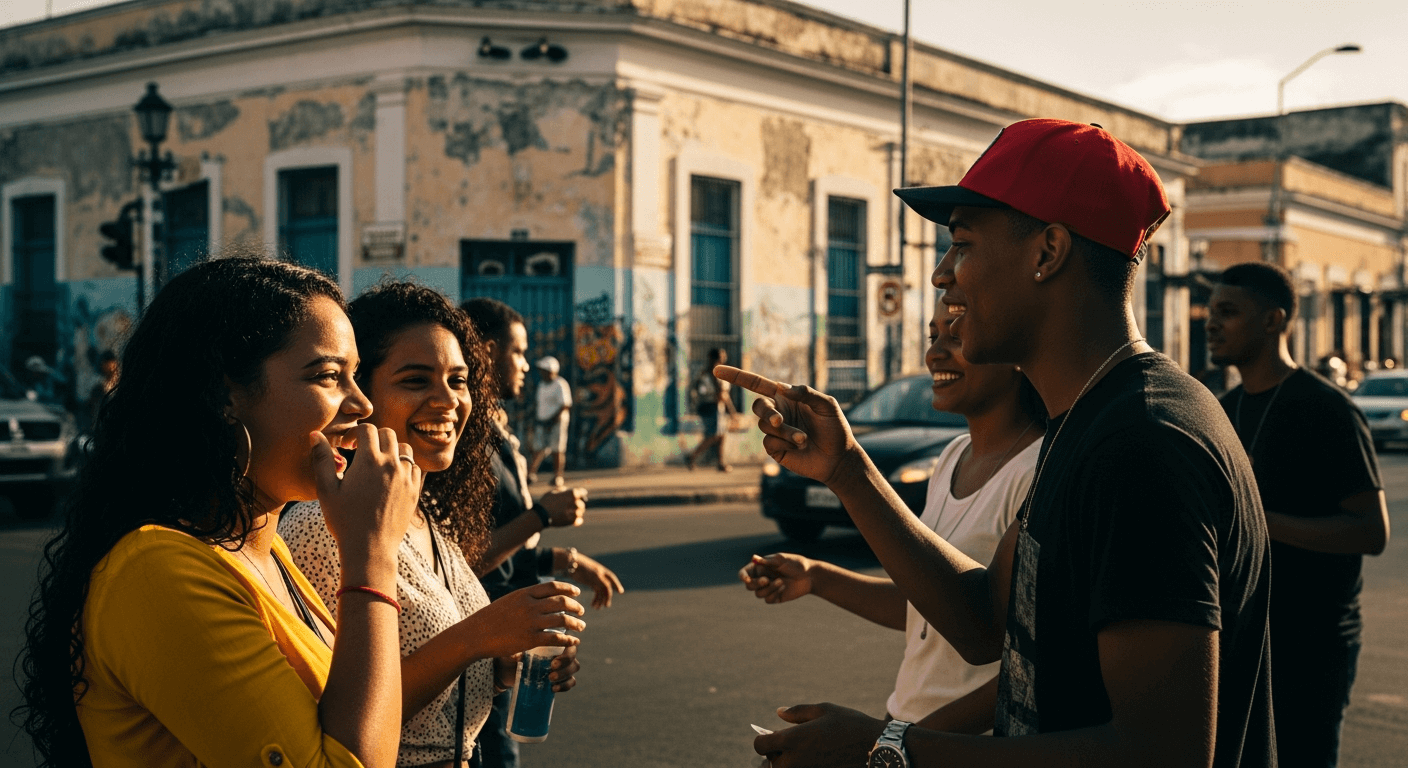
You learned "Hola" and "Gracias" in high school Spanish class. That’s a great start. But if you land in Punta Cana or Santo Domingo and speak perfect, textbook Spanish, we will understand you—but you’ll still sound like a tourist.
Dominican Spanish is legendary.It is fast, it is loud, and it is full of flavor. We have a reputation in Latin America: we speak at 100 miles per hour, we "eat" the letter 'S' at the end of words (so "¿Cómo estás?"becomes "¿Cómo tú 'tá?"), and we use words that simply don't exist in Mexico or Spain.
If you want to break the ice, make a bartender laugh, or just impress the locals, drop one of these 5 essential words into your conversation.

1. KLK (Qué lo Qué)
Pronounced:Kay-Lo-Kay
The Meaning:"What's up?", "How are you?", "What's happening?"
The Local Insight: This is the heartbeat of Dominican street culture. It is the shorthand for “¿Qué es lo que hay?”(What is there?).
How to use it:Instead of a formal "Hola," just give a slight head nod (chin up) and say, "Hey, KLK?"
Important Context:This is informal. Use it with your bartender, the bellboy, or a taxi driver you’ve been chatting with. Do notsay "KLK" to an immigration officer or a policeman. That’s like saying "Wazzup" to a judge.
2. Yatusabe (Ya Tú Sabes)
Pronounced:Jah-too-sah-beh
The Meaning:"You already know."
The Local Insight: It’s the name of this website for a reason! This is the ultimate filler phrase. We use it to fill awkward silences, to agree, or to say goodbye.
Scenario A (Agreement):
You:"Man, this heat is crazy today."
Local:"Yatusabe." (You know it.)
Scenario B (The Goodbye):
You:"Okay, see you later!"
Local:"Dale, yatusabe." (Alright, you already know.)
3. Vaina (The Magic Word)
Pronounced:Bai-nah
The Meaning:"Thing," "Stuff," "Situation," "Problem." (It literally means anything).
The Local Insight: If you forget the name of an object, congratulations: its name is now Vaina. It is the Swiss Army Knife of our language.
Neutral:"Pásame esa vaina." (Pass me that thing/remote/cup.)
Negative:"¿Qué es esta vaina?" (What is this crap/mess?)
How to use it:Point at something you want to buy and ask, "¿Cuánto cuesta esa vaina?"You will instantly sound less like a tourist.
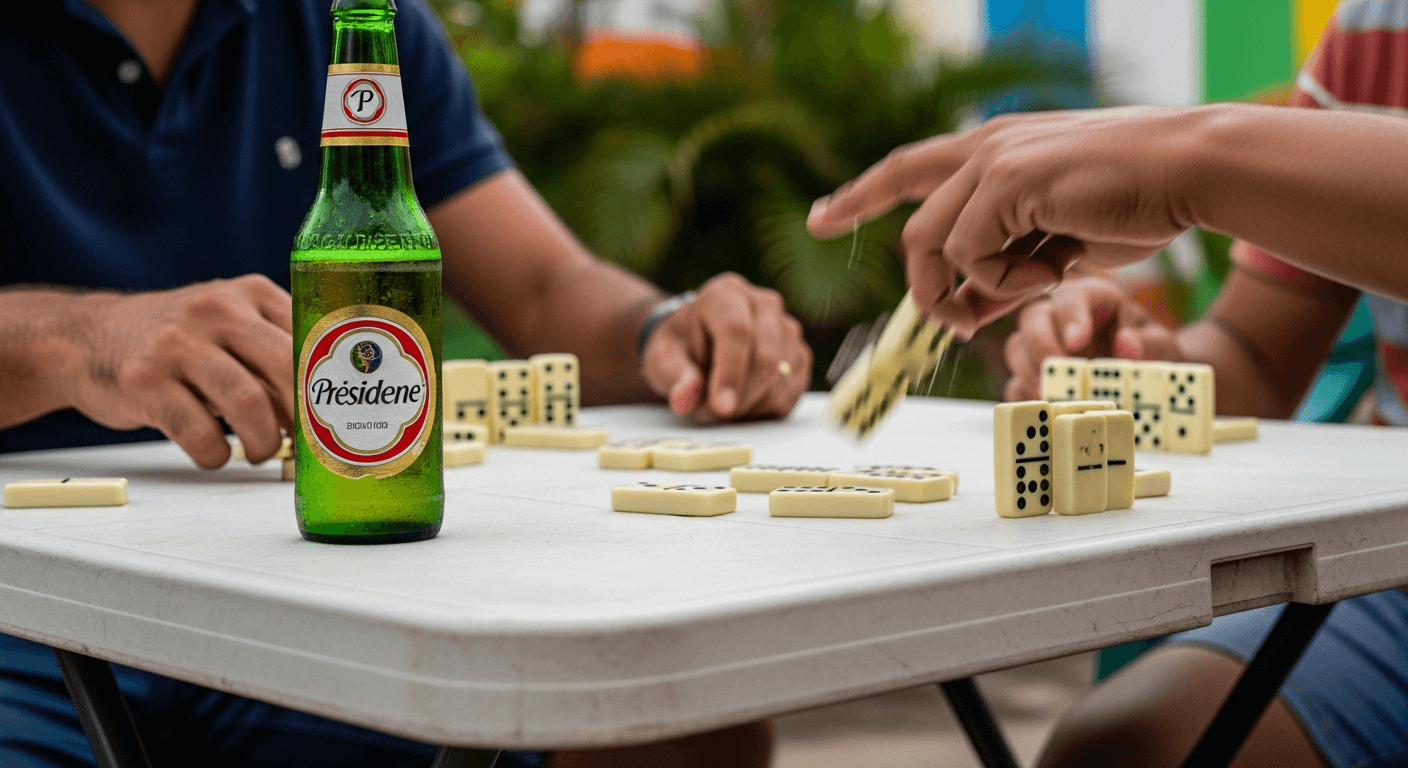
4. Una Fría (The Ritual)
Pronounced:Ooh-nah Free-ah
The Meaning:A cold beer (usually a Presidente).
The Local Insight: In the DR, we don't respect warm beer. If a beer isn't on the verge of freezing, we send it back. We call it "Vestida de Novia"(Dressed as a Bride) because the bottle should be covered in a white layer of frost.
The move:Don't ask for "Una cerveza, por favor." That’s boring.
Say this:Look the waiter in the eye and say, "Amigo, tráeme una fría."(Friend, bring me a cold one.) He will know exactly what you need.
5. Chin (A Little Bit)
Pronounced:Cheen
The Meaning:A small amount.
The Local Insight: We don't use the word "poco" very often. We use "Chin."
The Hand Gesture:When you say "Chin," you almost always have to pinch your thumb and index finger together to show how muchof a chin you want.
Usage:
"I speak un chin of Spanish."
"I want just un chin of cake."
"Espérate un chin." (Wait a second.)
Bonus: "Dale"
Pronounced:Dah-leh
The Meaning:"Okay," "Go ahead," "Let's do it," "Green light."
If your taxi driver asks if you are ready to leave? "Dale." If the bartender asks if you want another shot? "¡Dale!"
Final Thoughts
Dominicans are incredibly friendly people. We love it when visitors try to speak our slang, even if you mess it up. We won't laugh atyou; we'll laugh withyou.
So next time you walk up to the pool bar, don't just stand there. Nod your head, say "KLK,"and ask for "Una fría."Watch the service upgrade instantly.
Yatusabe!
.png&w=3840&q=75)
Written & Verified by
The Yatusabe Travel Team
We are a team of local explorers based in the Dominican Republic.
Some images are AI generated representations.