Let’s be real for a second. You booked that All-Inclusive resort in Punta Cana for one reason: to lock your wallet in the safe, put your brain on "airplane mode," and forget about math for a week. I get it. I live here, and I still love doing that.
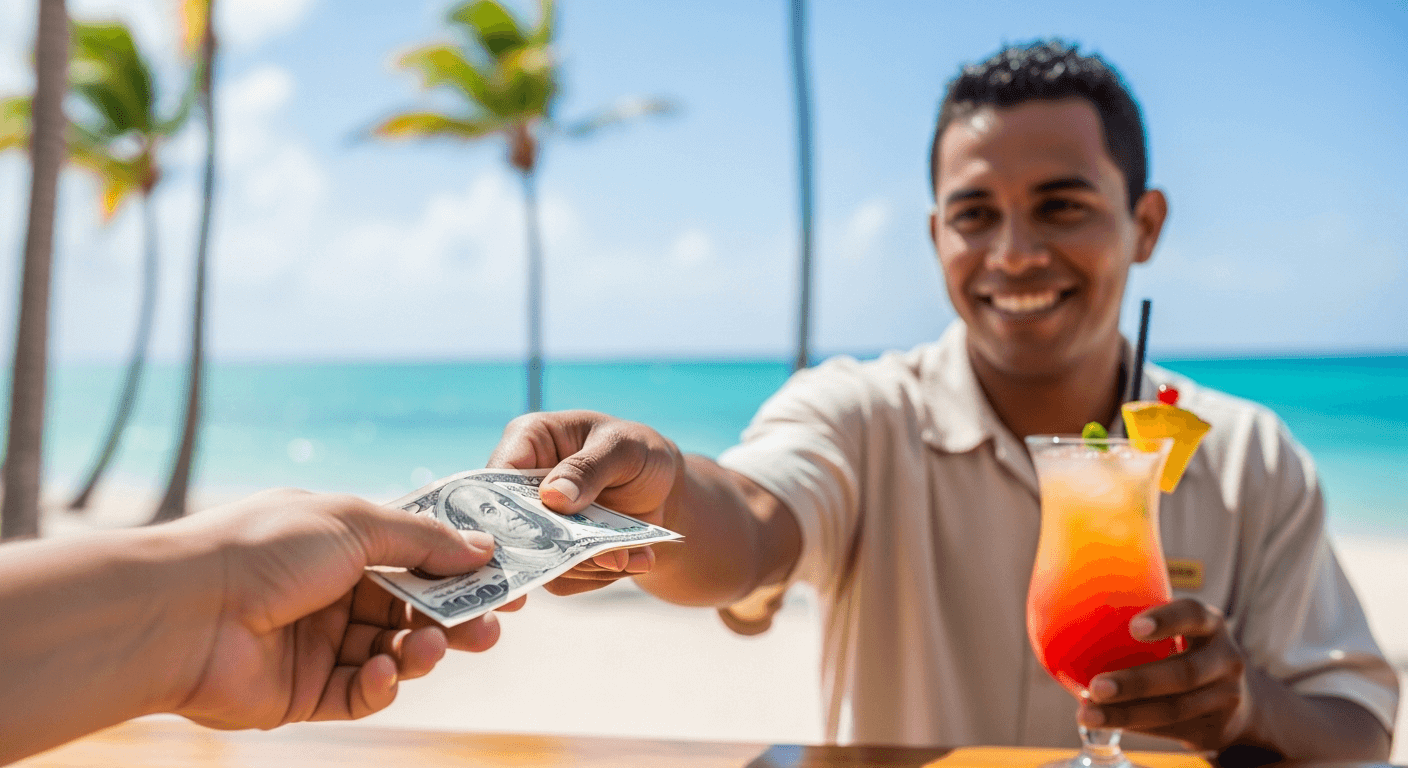
But then, reality hits at the pool bar. You order a cold Presidente beer (frosty white, or "vestida de novia"as we locals call it). The guy next to you slides a crumpled dollar bill to the bartender. Suddenly, his drink seems to have a generous extra pour of rum, and the bartender is smiling at him like they are old childhood friends.
You start wondering: "Am I being cheap? Did I miss the memo?"
As someone who has lived in the DR long enough to know the difference between a tourist trap and a hidden gem, let me tell you the truth that travel agencies won't: Yes, you need to tip.Not because it’s mandatory—no one will chase you down the beach if you don't—but because the entire tourism ecosystem runs on it.
Here is my raw, field-tested guide to handling cash in the DR without getting ripped off or looking like a stingy outsider.
1. The "10% Legal Tip" Lie (And Why You Should Ignore It)
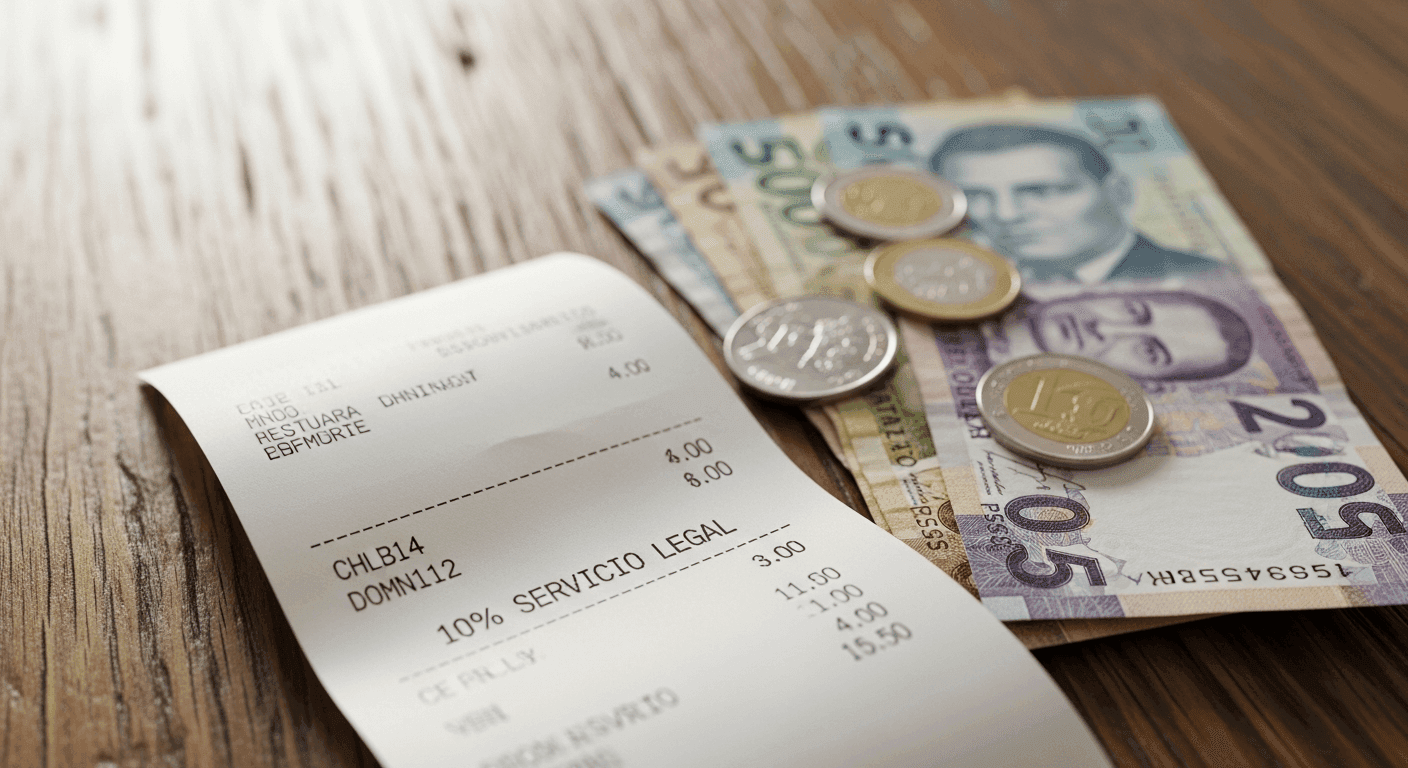
If you venture outside your resort to a local restaurant—which I highly recommend—you will see a charge on your bill labeled "Ley 10%"(Law 10%).
The law says this money is for the waiters. The reality? It’s complicated. That money often gets delayed for months, heavily taxed, or in some unfortunate cases, used by management to cover broken plates or inventory loss. The waiter standing in front of you—the one who ran to the kitchen three times to get you extra limes—often sees pennies of that charge.
My Local Advice: Mentally ignore the 10% on the check. Assume it's just part of the food cost. If the service was good, leave cash on the table. That money goes straight into their pocket (and towards their family's dinner that night). It is the most direct language of appreciation here.
2. The "First Day" Strategy (My Personal Secret)
Let me share a quick story. A few years ago, during Semana Santa(Holy Week)—when the resorts are packed to the brim—I was at a hotel in Bávaro. The swim-up bar was a war zone; three rows of people deep, all shouting for drinks.
Instead of fighting for attention every time I wanted a water or a beer, I used the "Anchor Strategy."
I walked to the quiet end of the bar, made eye contact with one bartender (let's call him Luis), and shook his hand firmly with a $20 billfolded in my palm. I told him: "Luis, my name is Jay. I’ll be hanging out here this week."
The Result? For the rest of the trip, Luis would spot me walking across the pool deck from 50 yards away. By the time I reached the bar, my drink was already waiting on the counter.
The Lesson:Don't tip $1 for every single Coke; it slows everyone down. Make a strong initial investment with your main bartender or server on Day 1. It is the best $20 you will spend on your entire vacation.
3. Housekeeping: The Invisible Heroes
The ladies who clean your room work incredibly hard in the Caribbean heat, and they are often the lowest-paid staff on the property.
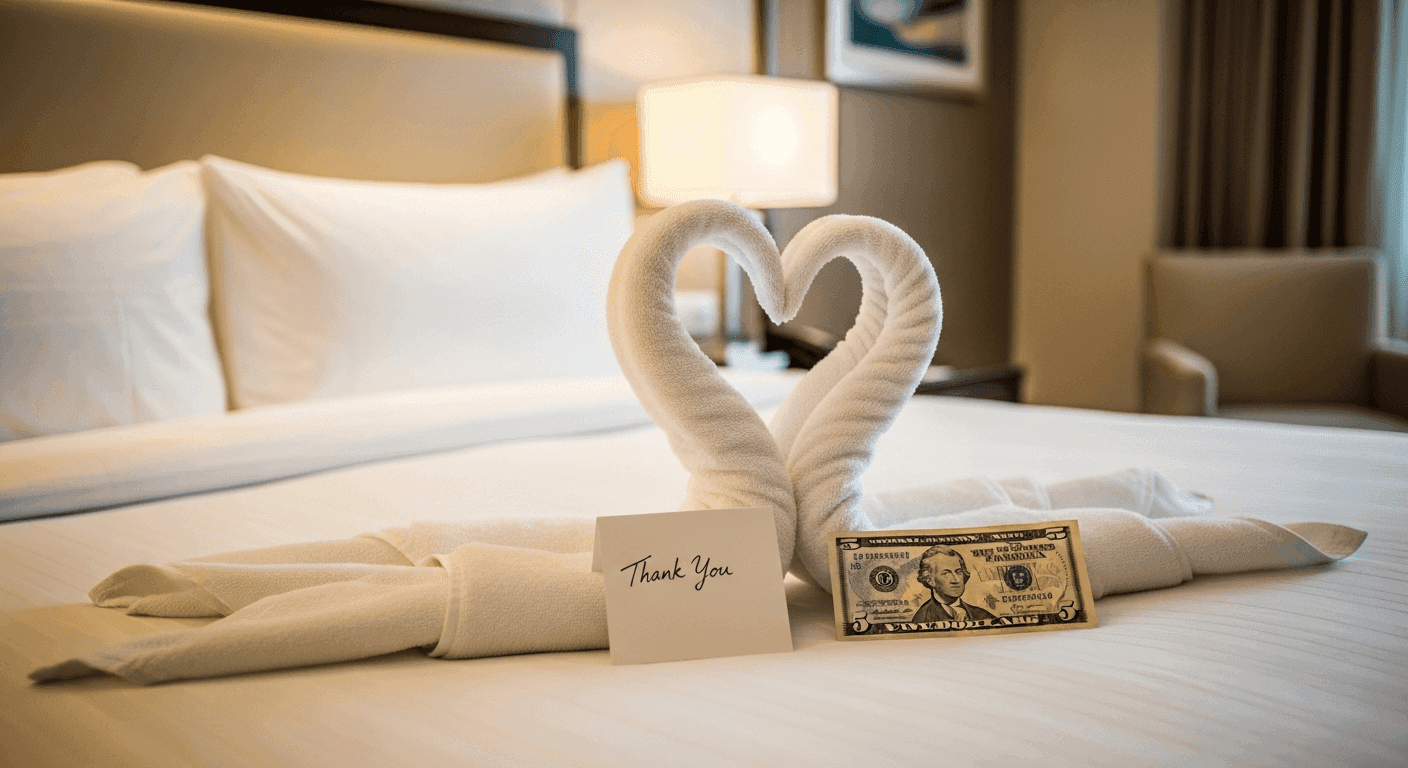
A huge mistake tourists make is leaving a lump sum on the last day (e.g., leaving $20 on the bed when checking out). Please don't do this. Staff shifts rotate constantly. The lady who cleaned your sandy mess on Tuesday might be off on Sunday when you leave. If you tip at the end, the person receiving the money might be someone who never even cleaned your room.
The Rule:Leave $2 or $3 dollars on your pillow every morning. This ensures the specific person cleaning that day gets the reward. You might even find extra water bottles, fresh flowers, or fancy towel art when you return from the beach.
4. Please, NO COINS! (Listen Up, Canada and Europe)
This is a massive pain point for staff that most tourists don't realize. I see wonderful people from Canada leaving "Toonies" or Europeans leaving 2-Euro coins on the table.
The Hard Truth:Dominican banks and exchange houses DO NOT accept foreign coins. That 2-Euro coin is literally a worthless piece of metal to a Dominican waiter. They cannot deposit it, they cannot exchange it for Pesos, and they can't buy milk with it. I’ve seen staff with jars full of foreign coins they can't use.
The Fix:If you ran out of US One-Dollar bills, use Dominican Pesos (DOP). A 100 or 200 Peso note is perfect and highly appreciated. Leave the heavy metal coins at home.
5. Quick Reference Cheat Sheet (2025 Prices)
Save this screenshot so you don't have to do mental math after a couple of Mimosas:
Bellboys:$1 - $2 USD per bag. (Don't just say "thanks"—hauling luggage in this humidity is a workout).
Taxi Drivers:Not strictly necessary if you negotiated the price beforehand (always negotiate first!), but rounding up the fare is a classy move.
Tour Guides:$5 - $10 USD per person. If the guide kept you safe, entertained, and taught you something new for 4 hours, they earned it.
Street Smarts: The "Pocket Split" (Safety Tip)
Before I sign off, here is a safety tip I learned the hard way while exploring the Colonial Zone. Never pull out a giant wad of cash just to pay a small tip.
Before you leave your hotel room, organize your money:
Right Pocket:A stack of $1s and $5s for tips and small purchases.
Safe/Hidden Pocket:Your larger bills ($20s, $50s, $100s).
When you tip the bellboy, you only reach into your "small bills" pocket. Pulling out a thick stack of cash in public attracts unnecessary attention. Be discreet, be smart, and keep a low profile.
Final Thoughts
Look, nobody is going to yell at you if you don't tip. Dominicans are naturally hospitable and friendly people. But tipping here isn't just about the money; it's a language. It says, "I see you, I value your work, and I appreciate you making my vacation effortless."
Bring a stack of $1 bills (ask your bank back home, because the resort front desk neverhas change), and spread the love. I promise you, the smiles and service you get back will be worth way more than a few dollars.
Enjoy the island, and have a cold Presidente for me!
.png&w=3840&q=75)
Written & Verified by
The Yatusabe Travel Team
We are a team of local explorers based in the Dominican Republic.
Some images are AI generated representations.